
A tale of two vehicles
“To be underwater, or not to be underwater? That is the question.”
- Hamlet (If Shakespeare had worked in deep submergence)
Which is better for scientific research, a remotely operated vehicle (ROV) or a human-occupied vehicle (HOV)? The question has been oft debated at sea and in the lab. My own view has oscillated over years of sea-going research. Right now, I am on board R/V Atlantis in the Labrador Sea with the opportunity to use both technologies. This experience has brought the pros and cons of each approach into clear view.
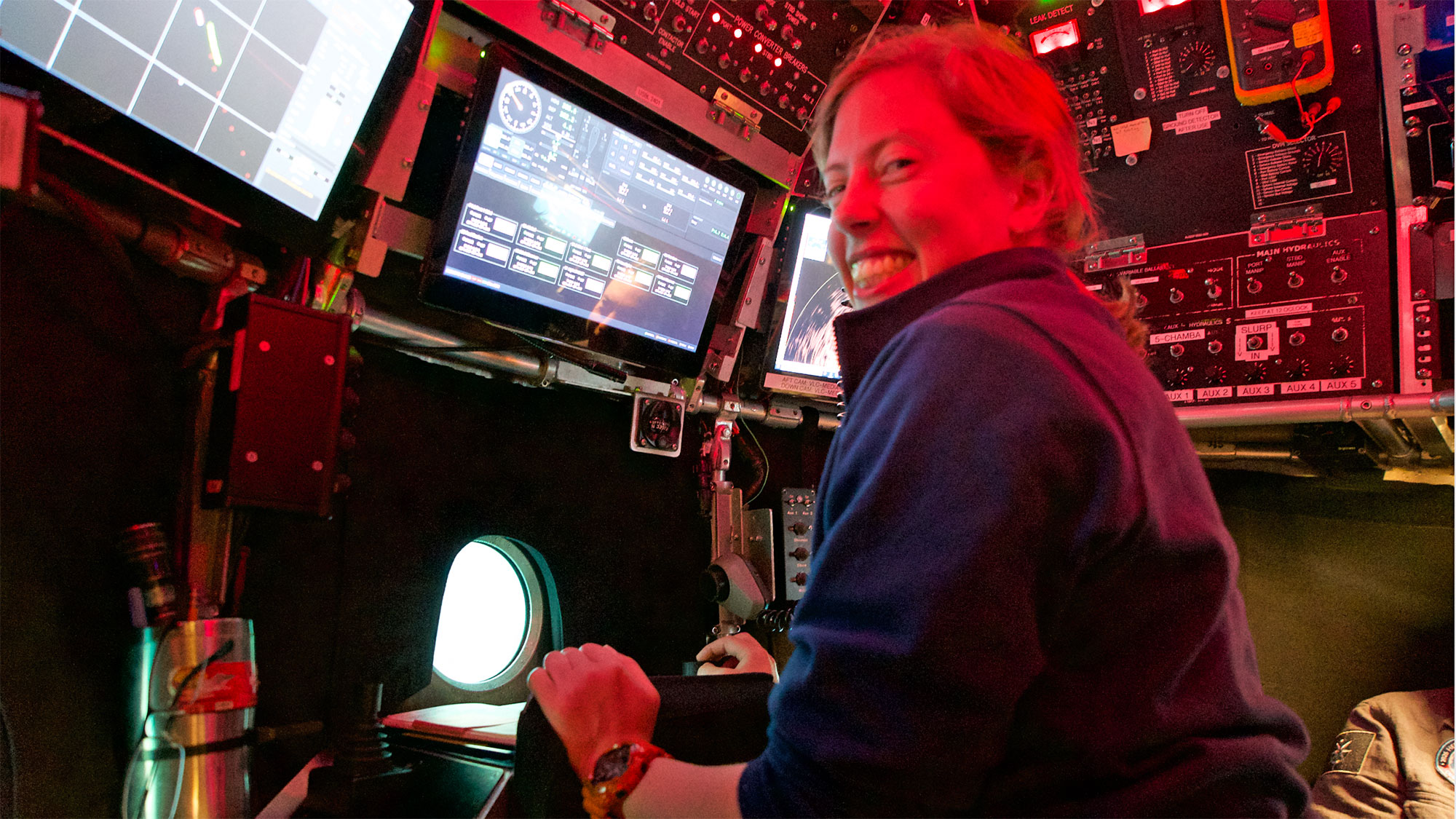
Diving in Alvin is, in a word, profound. I had my first dive as a PhD student in 2015, at a cold seep in the Mid-Atlantic Bight. This week, I got the rare chance for a second dive, this time on a shipwreck called Quest in the Labrador Sea. I was reminded all over again of the beauty and wonder of the deep ocean. When underwater, I feel a deep emotional connection to my study organisms and the world they live in. I experience some of the same environmental conditions as they do—light declining and then extinguishing as we descend, a near-bottom current pushing on the sub, cold temperature that permeates the titanium to cool Alvin’s interior. I get a sense of the size and scale of the shipwreck out my viewport, and the three-dimensional structure of the habitat comes into clear view. Seeing the ocean floor with my own eyes is a powerful, even life-altering experience. There is nothing like it.
Yet, as an operational and scientific tool, even Alvin has its limitations. Only three people can be in the sub at any given time and communication to the support ship, Atlantis, is via acoustic transmission only. Executing the science objectives for a dive is entirely up to those inside the sub with minimal guidance from the surface— other members of the science party cannot see what they are seeing.
ROV dives are an entirely different experience. Though limited by the cameras’ field of view, the live video feed allows every scientist on board (and increasingly, those on shore) to participate in real-time. Collaborative conversations arise spontaneously around the ROV feed, like a business meeting in a movie theater.
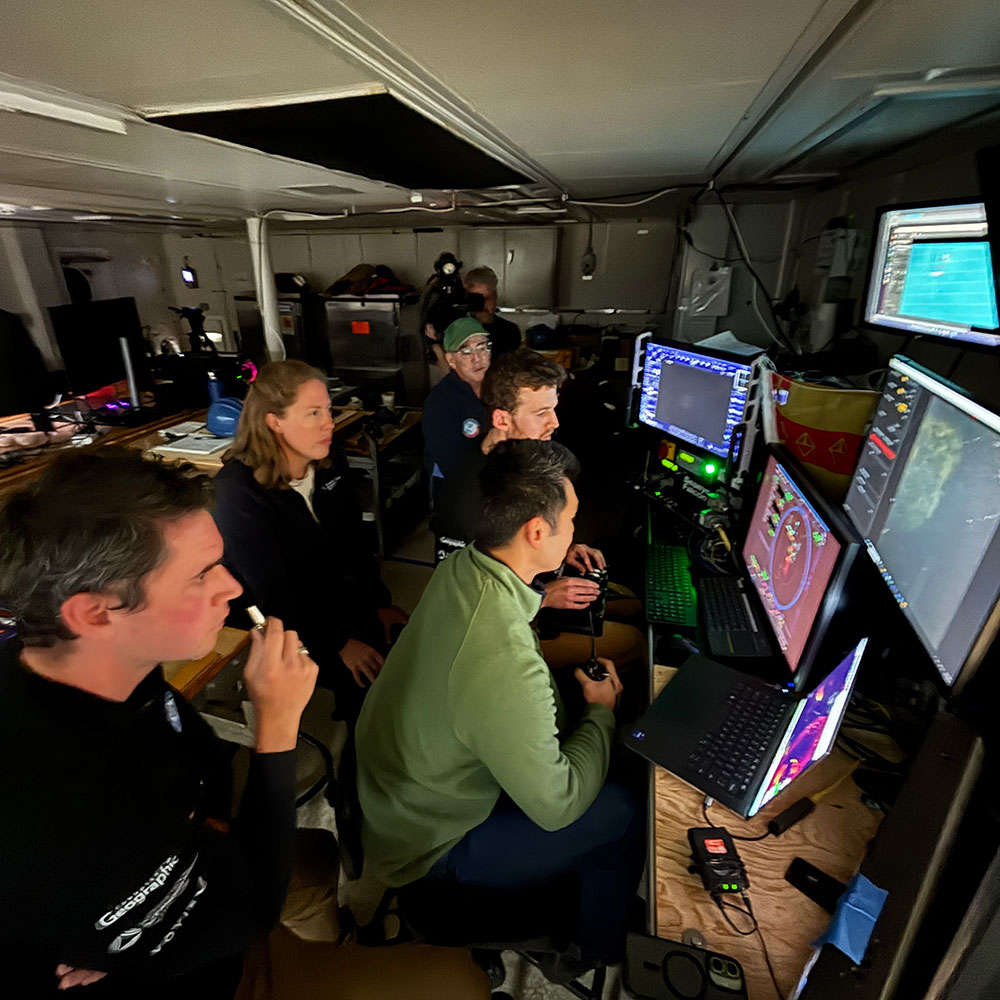
On board Atlantis this week, we have used the Saab Falcon ROV from WHOI’s NSF-funded Ocean Observatories Initiative to document shipwrecks Quest and Terra Nova. Each person watching the video notices something different in the video. The ROV hovers over the aft debris field on Terra Nova, and a historian points out the helm, a biologist the sponges. The collective brain power in the room helps us develop a deep, holistic understanding of the shipwreck and its environment. That real-time collaboration is a hallmark of ROV operations, just as the contextual perception and situational awareness central to Alvin dives.
On Quest, the ROV also provided advance reconnaissance for Alvin dives by mapping entanglement hazards, identifying targets of interest for the various experts on board during their dives in the sub, and generally making each dive more efficient and effective.
For me, the ROV video recording of both wrecks is an incredibly valuable and ever-expanding resource that I will review again and again following the cruise. My dive in Alvin will live in my memory for years, providing endless motivation to me and to those with whom I engage about my work and the importance of the ocean. Both technologies are valuable and complementary approaches to deep submergence, and I am privileged to work at an institution that excels in both.