
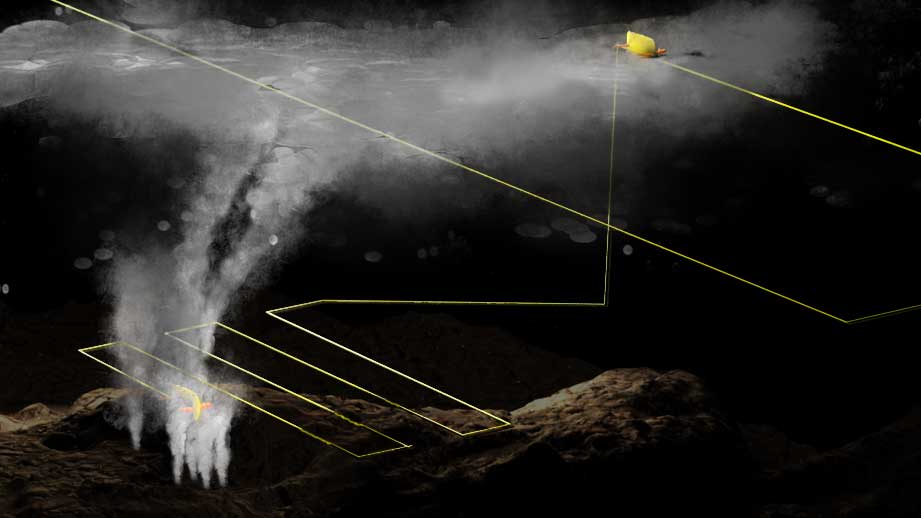
Sampling hydrothermal iron with adaptive AUV Sentry dives. A cruise of unusual and uniquely challenging Sentry missions: real-time course modifications, remotely triggered sample collection, and flying the vehicle in midwater.
Read More »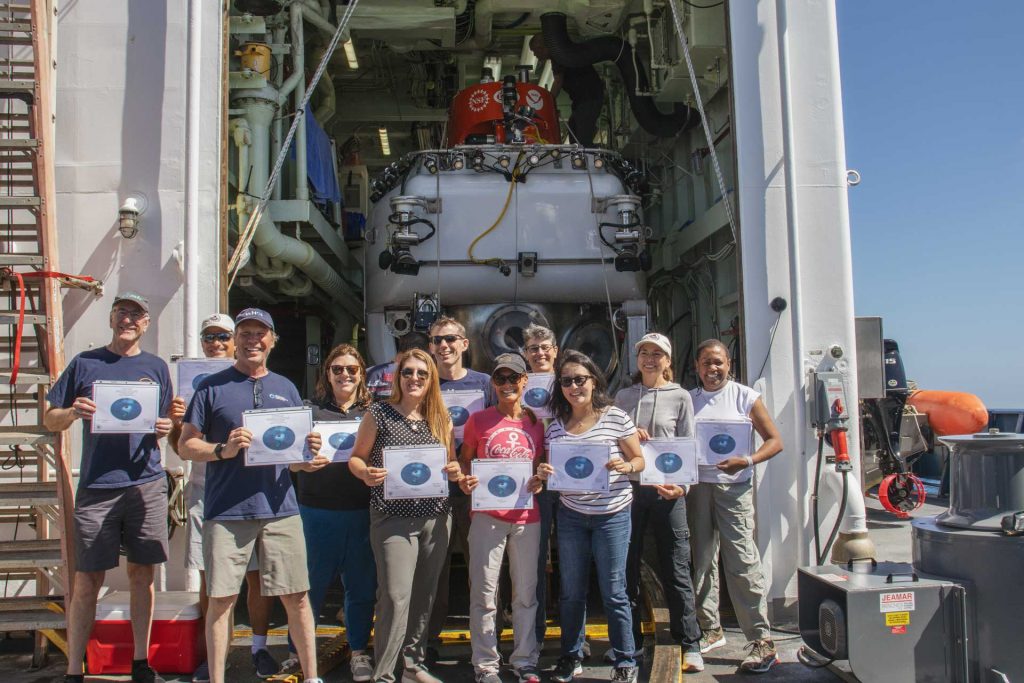
In August, the Office of Naval Research (ONR) sponsored three days of engineering dives with human-occupied vehicle Alvin off the coast of San Diego, California. The vehicle team and crew of R/V Atlantis took federal agency representatives from the National Science Foundation, ONR, NAVSEA, Office of Management and Budget, National Oceanic and Atmospheric Administration, and WHOI leadership on a short expedition to demonstrate the intricate operations and rigorous protocols that enable safe scientific submersible operations.
Read More »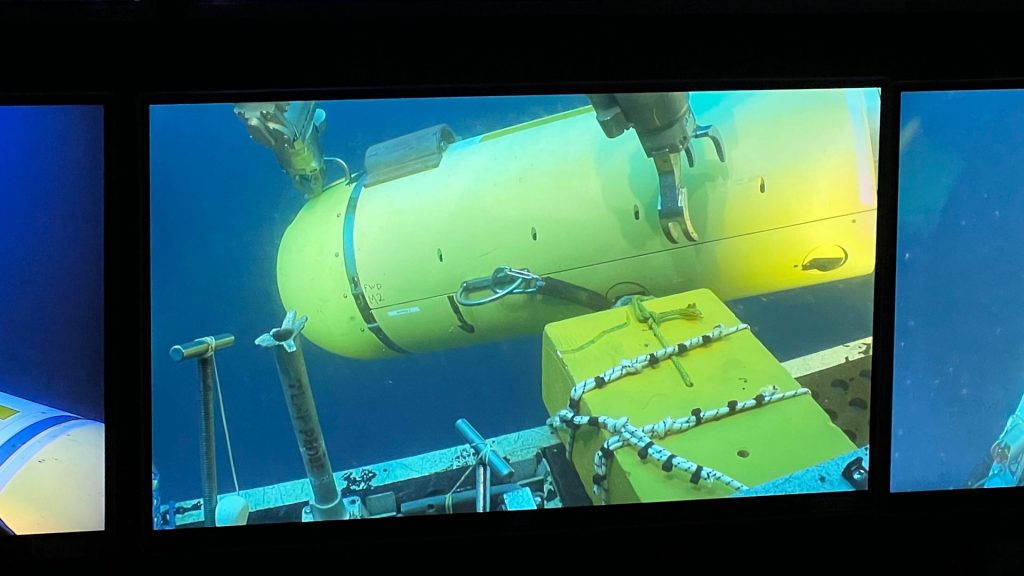
ROV Jason assists in the recovery of three autonomous research platforms-two of which were unplanned-during the Visions 23 expedition to the Ocean Observatories Initiative Regional Cabled Array. Read more >
Read More »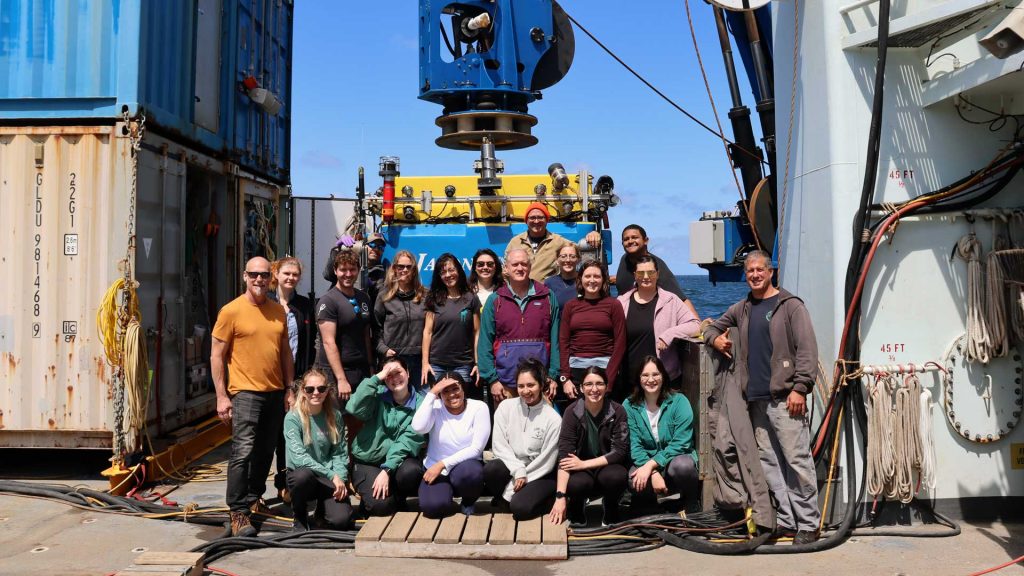
The PROTATAX23 Science Team and members of the Jason Team on deck of R/V Thomas Thompson. (Photo by Thompson AB Elena Wisecarver, ©Woods Hole Oceanographic Institution) The numbers and teamwork…
Read More »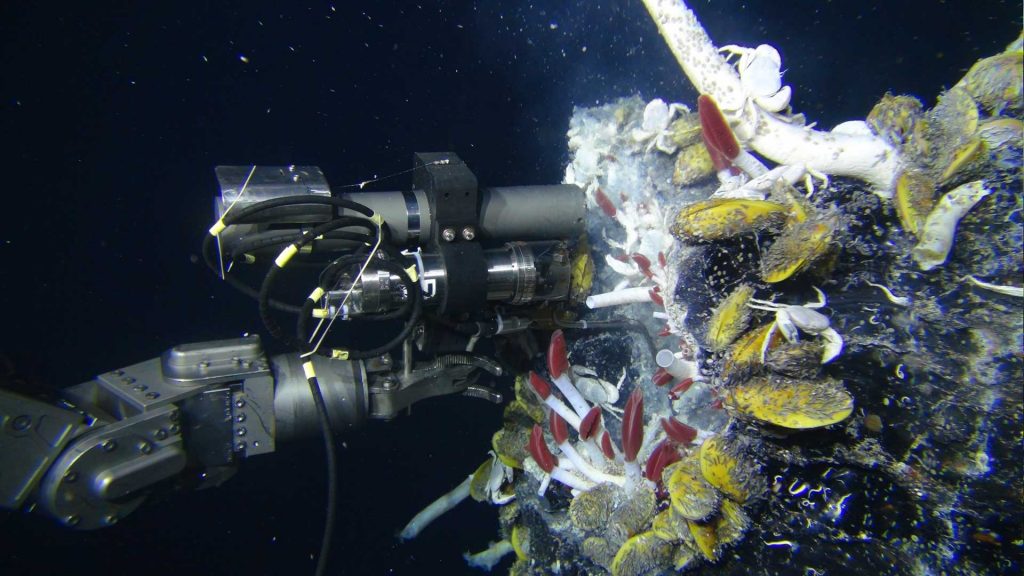
Jason uses an isobaric gas-tight (IGT) sampler to collect fluids flowing from a hydrothermal vent in the Pacific that supplies chemicals supporting lush, vibrant ecosystems. (hoto courtesy of Stefan Sievert,…
Read More »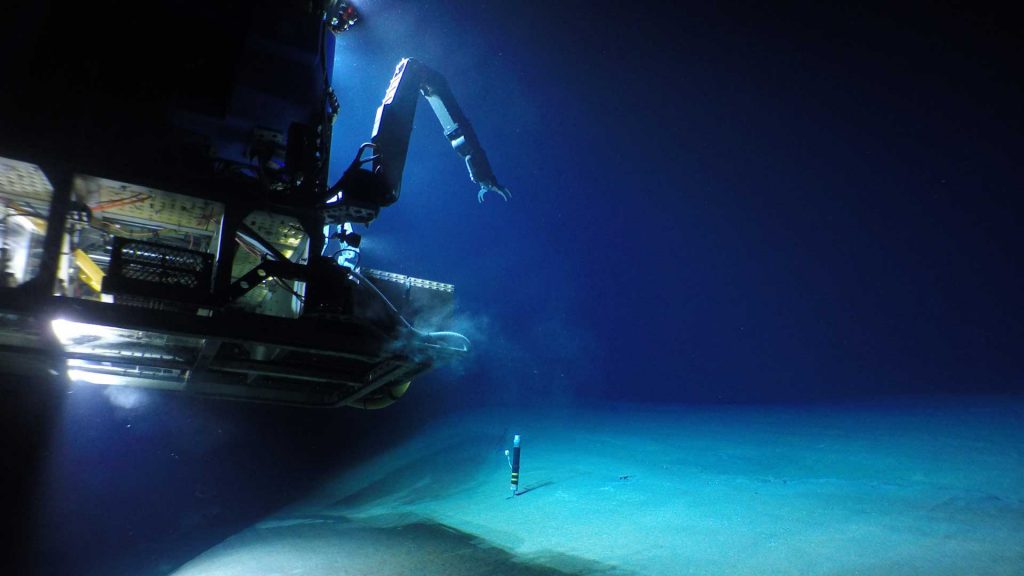
In 2015, Jason explored the inside of the Havre volcano on the seafloor near New Zealand. (Photo courtesy of Dan Fornari and S. Adam Soule, WHOI, and Rebecca Carey, Univ.…
Read More »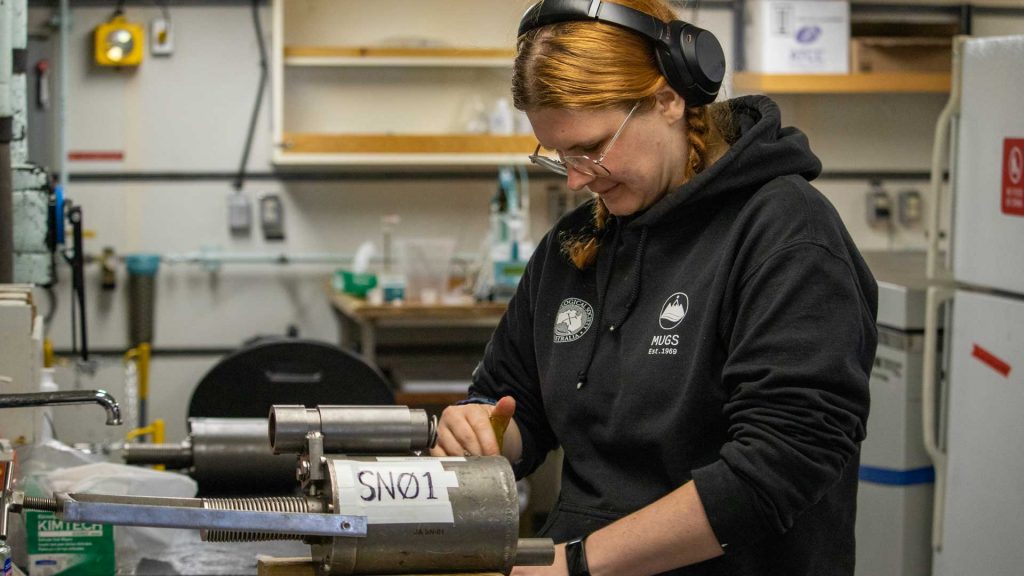
NASA Jet Propulsion Laboratory Postdoctoral Fellow Bonnie Teece working with a major water sampler after a Jason dive. These samplers, invented after the discovery of hydrothermal vents, are capable of…
Read More »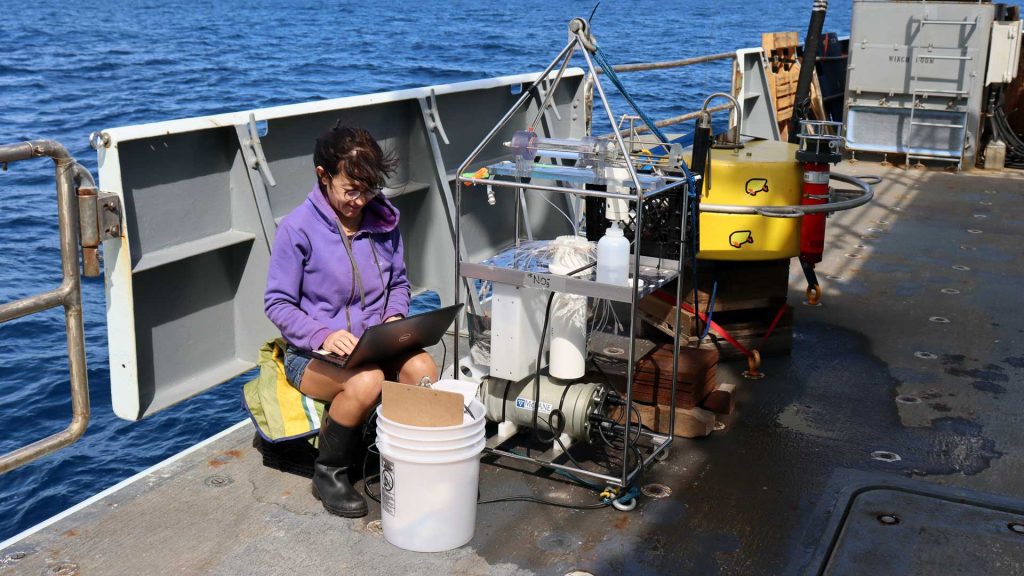
WHOI Associate Scientist Maria Pachiadaki with her instrument miniSID, which can perform experiments at hydrothermal vents while on the seafloor. (Photo by Hannah Piecuch ©Woods Hole Oceanographic Institution) Q&A with…
Read More »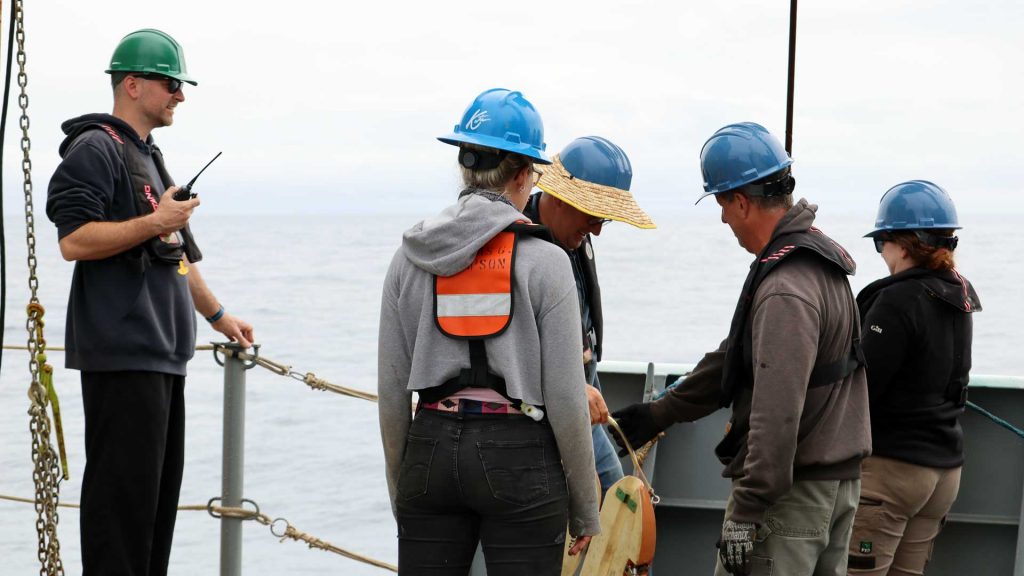
Jason Expedition Leader Chris Judge (left) acting as deck boss for a Jason deployment. Also pictured (left to right): R/V Thompson AB Kate Varberg and Jason Team members Hugh Poponoe,…
Read More »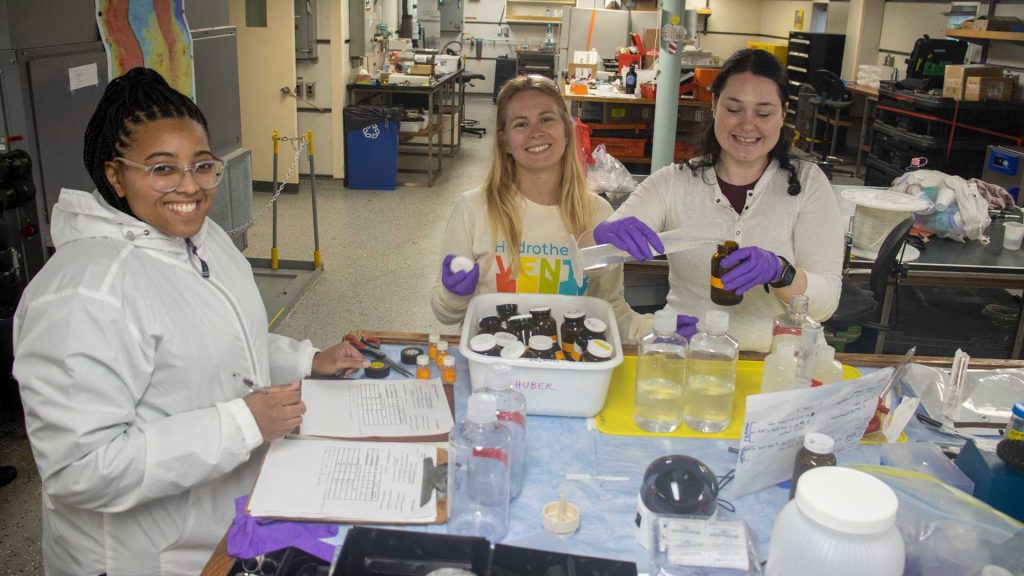
ROV Jason first impressions with early career scientists (Left to right): Texas A&M graduate student Kayla Nedd, WHOI Guest student and Scripps Institution of Oceanography postdoc Emilie Skoog, and Texas…
Read More »